






Artificial intelligence is often perceived as something abstract “in the cloud,” accessible with just a few clicks and without any physical dimension. The truth, however, is quite different. Behind every AI model, every data-processing task, and every “smart” decision lies very real infrastructure: servers, networks, power supply, cooling, and all the systems for security and redundancy.
The difference lies in who uses this infrastructure and for what purpose. Small companies that use ready-made tools such as ChatGPT or Gemini do not need their own resources. But businesses that want their own AI model, control over their data, and local processing inevitably reach the question of reliable IT infrastructure, where the data center becomes a key factor.
Does AI require enormous computing power?
Every AI model connected with data analysis, machine learning, and automation requires specific computing resources - processors, certain types of graphics cards, data storage capacity, network connectivity, uninterrupted power supply, and guaranteed cooling.
The main question is what resources are needed for it to operate. If you are developing and deploying AI models to be used by many clients and end users, you may need thousands of servers. If you only need to train AI on confidential documentation or allow it to “read” your email without sending that information outside, a single server may be sufficient.
In all cases, if you rely on the model, you must ensure power supply, air conditioning, and internet connectivity—something that is easiest to achieve in a data center. There, the scale of all these resources is fully aligned with your needs and can scale over time.
Even the largest companies rent data centers and do not build 100% of their infrastructure
Another common misconception is that technology giants build their entire infrastructure independently. In reality, many of them extensively rent resources and colocate equipment in high-class professional data centers. Some of the reasons are quite obvious. Building and managing your own data center requires:
- Long-term investments in an area different from the company’s core products and services;
- Access to critical and redundant resources - electricity, internet connectivity, etc.;
- Team expertise in system maintenance, cooling, security, and business continuity;
- Compliance with high standards and strict regulations for security and transparency.
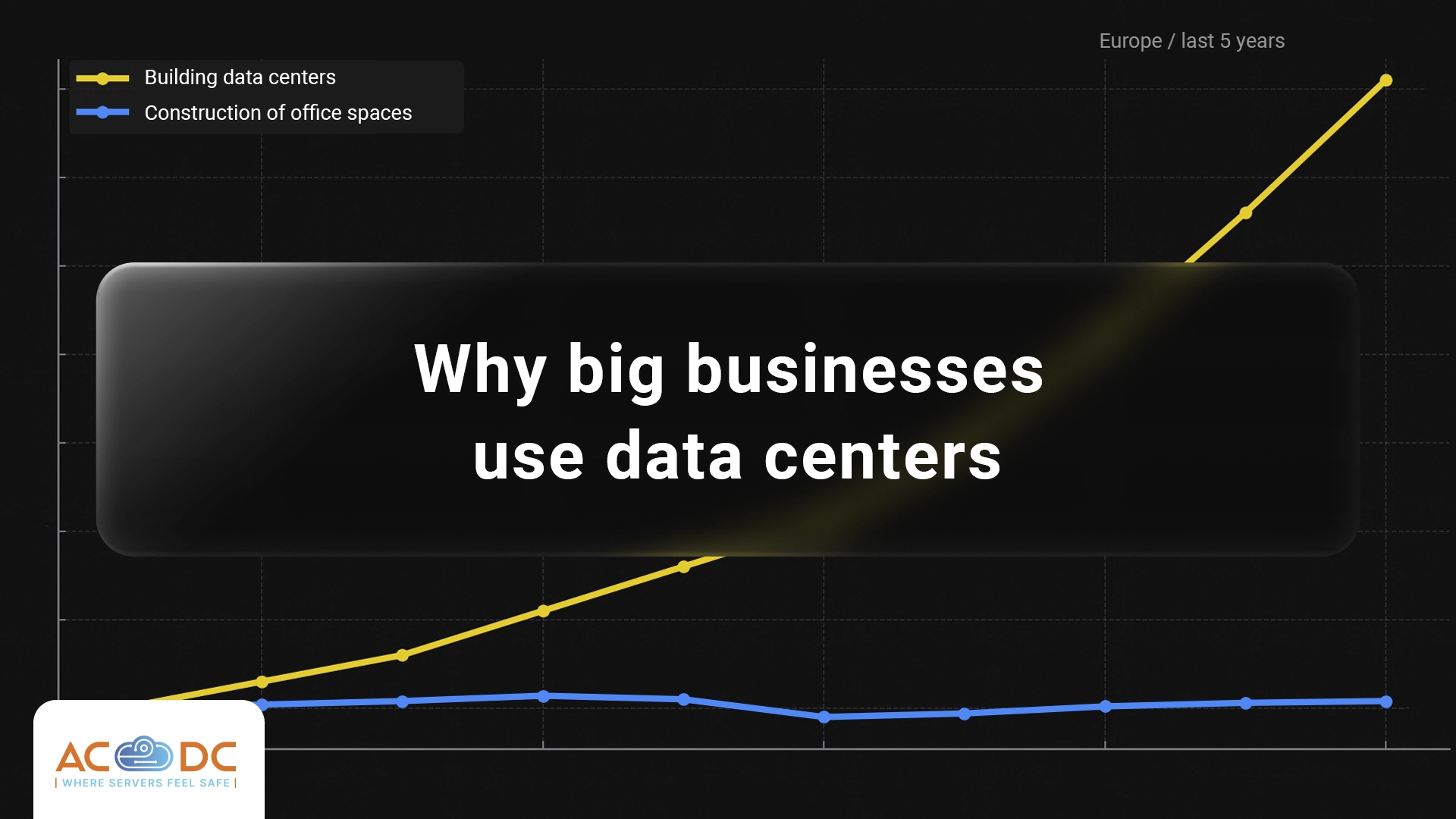
See also: Why large businesses use data centers
When AI becomes an infrastructure project and why the office is not a suitable environment for its development
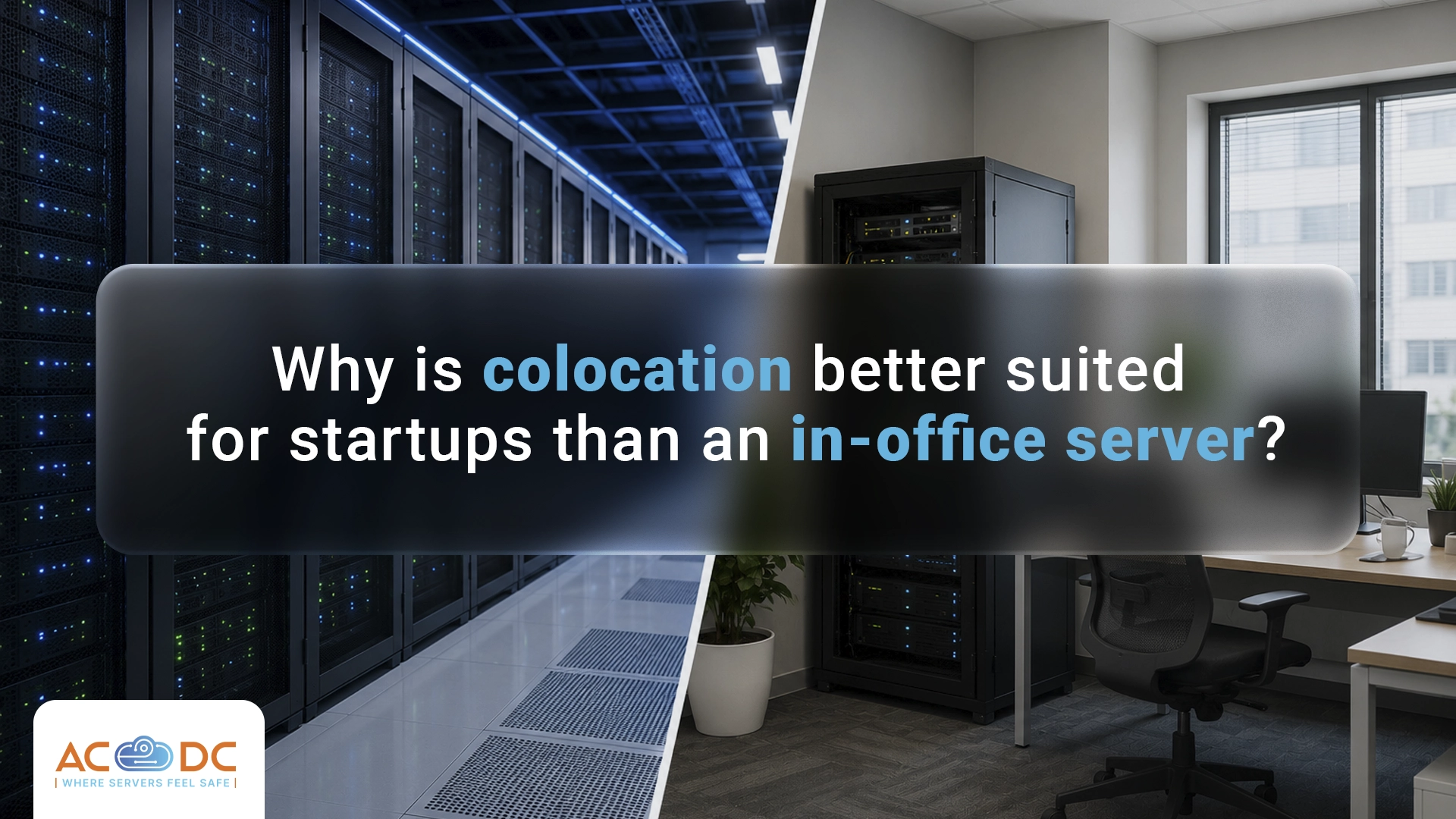
If your organization wants to train AI models on its own data but cannot afford the leakage of sensitive information due to regulations or internal policies, this becomes a matter of having your own infrastructure with sufficient performance, low latency, and full control. Placing such infrastructure on a server in your office is not a good idea for many reasons:
- Risk of power or connectivity outages;
- Lack of system redundancy;
- Need for professional server cooling systems;
- Security, access, and human-factor issues.
For all these risks, the solution is server colocation in a high-class data center, where you can rely on all the necessary resources for their continuous operation and easy maintenance.
Contact the team of IT experts at AC☁DC to learn how we take care of our clients’ equipment and why our data center is a suitable colocation point for servers for companies from Varna and Eastern Bulgaria.
Свържете се с нас
Интересувате се от колокация на сървъри или други услуги? Свържете се с екипа ни още сега.

 16 September, 2026
 9 September, 2026
 27 August, 2026
 18 August, 2026
 11 August, 2026
 4 August, 2026
 28 July, 2026
 21 July, 2026
 15 July, 2026
 7 July, 2026
 30 June, 2026
 21 June, 2026
 16 June, 2026
 9 June, 2026
 2 June, 2026
 27 May, 2026
 19 May, 2026
 12 May, 2026
 6 May, 2026
 21 April, 2026
 15 April, 2026
 8 April, 2026
 1 April, 2026
 24 March, 2026
 18 March, 2026
 11 March, 2026
 4 March, 2026
 26 February, 2026
 19 February, 2026
 5 February, 2026
 3 February, 2026
 27 January, 2026
 20 January, 2026
 13 January, 2026
 8 January, 2026
 4 January, 2026
 22 December, 2025
 10 December, 2025
 4 December, 2025
 26 November, 2025
 17 November, 2025
 11 November, 2025
 4 November, 2025
 27 October, 2025
 20 October, 2025
 8 October, 2025
 5 October, 2025
 30 September, 2025
 19 September, 2025
 15 September, 2025
 4 September, 2025
 29 August, 2025
 23 August, 2025
 16 August, 2025
 12 August, 2025
 6 August, 2025
 28 July, 2025
 22 July, 2025
 15 July, 2025
 11 July, 2025
 3 July, 2025
 19 June, 2025
 3 June, 2025
 27 May, 2025
 21 May, 2025
 14 May, 2025
 7 May, 2025
 29 April, 2025
 23 April, 2025
 14 April, 2025
 8 April, 2025
 27 March, 2025

 0882 355 203