






In many companies, IT infrastructure is planned and built mainly to meet the current needs of the business. The servers handle the current load, the internet connection serves the users, and power and cooling are sufficient resources for now. As long as the business is stable and there aren’t any sudden changes, this approach is entirely reasonable. However, problems arise when the company starts to grow.
Proactivity Always Pays Off
Business growth rarely comes smoothly and predictably. New customers, more orders, expansion into other markets, and opening new offices and stores all put pressure on IT systems much faster than planned. At such times, infrastructure designed only for the current needs becomes a limitation rather than a support to the business.
This is where the difference between a reactive and a proactive IT strategy becomes crucial. The reactive approach means acting after the problem has occurred:
- Adding another server only when the old one can no longer handle the load.
- Replacing network equipment when connections start dropping.
- Looking for an emergency power solution after an outage has already happened.
Each of these actions, taken separately, might seem logical, but in the long run, they lead to fragmented, difficult to maintain, and expensive infrastructure.
The predictability of costs is another key aspect. A reactive IT strategy almost always leads to unplanned expenses. Emergency purchases, urgent repairs, overtime work, and losses due to service interruptions often cost significantly more than a well-planned, long-term investment. When infrastructure is located in a data center, much of these risks are shifted outside the company and become part of a predictable service.
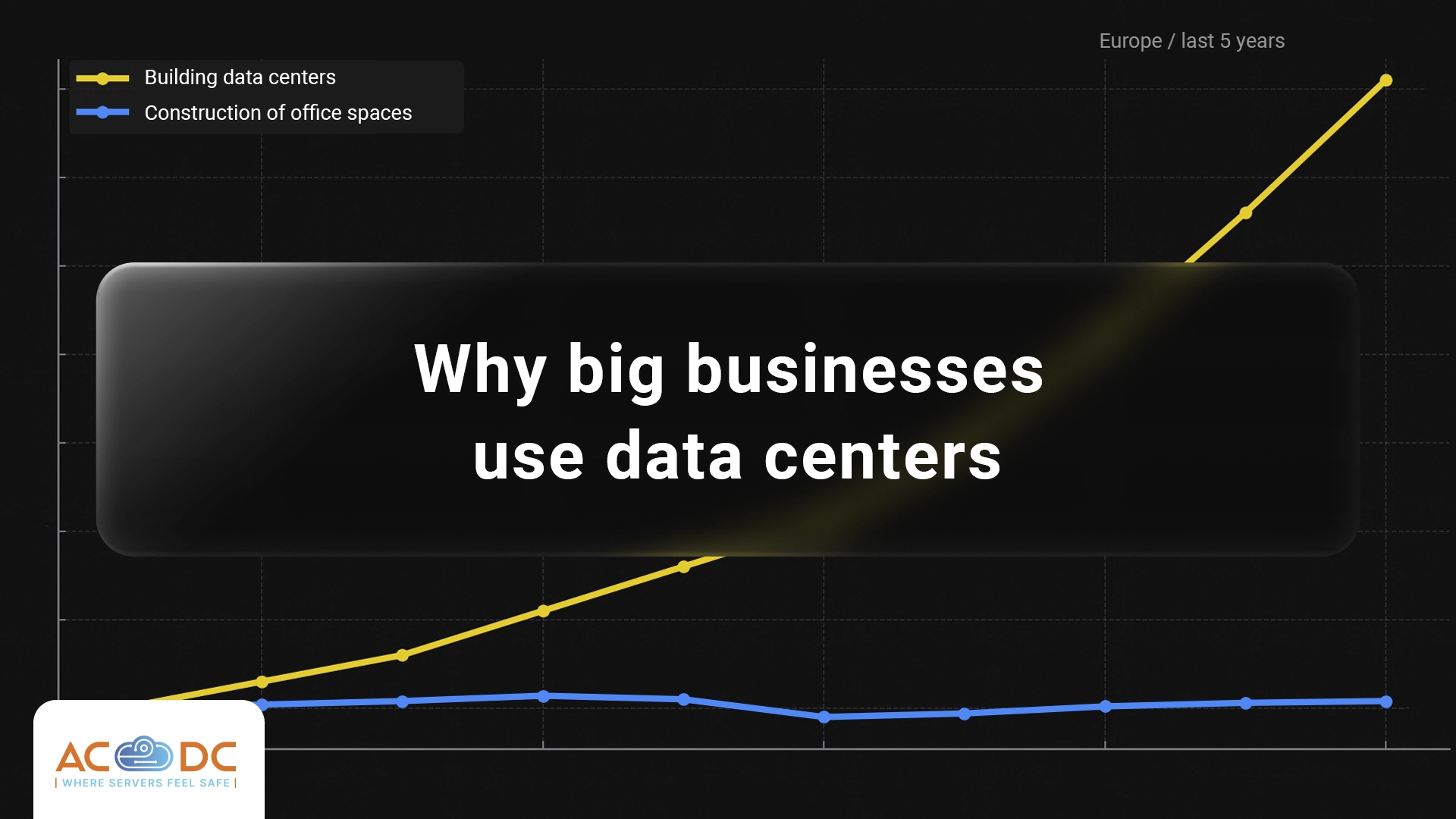
See more on the topic: Why Large Businesses Use Data Centers
What Does Growth-Ready IT Infrastructure Mean?
Growth-ready infrastructure is planned in an entirely different way. Instead of responding only to today’s needs, it anticipates what the business will look like in two, three, or five years. This means reserved capacity, the ability to quickly add resources, clear expansion scenarios, and minimal risk of disruptions during changes.
In an office environment, such planning is often difficult or even impossible. Physical limitations are a major factor—space, electrical power, cooling, noise, security. Even when everything is built with growth in mind, compromises are inevitable. Adding new equipment often requires renovations, additional investment, and time during which the systems are vulnerable.
Professional Data Center: The Most Reliable Solution to the Issue
Professional data centers are designed with growth in mind. Reserved power, cooling, and flexible network connectivity allow for expansion without interrupting operations. Adding new servers, increasing capacity, or implementing new services does not require a complete rethink of the infrastructure because it is already prepared for it.
All this, combined with processes, clear procedures for IT incidents, responsiveness, and access to expert support, makes data centers the best solution for businesses with multiple locations, remote teams, or critical systems such as ERP or accounting platforms, for which downtime is not acceptable at all.
At AbsCloud Data Center (AC☁DC) we know that caring for IT infrastructure within a company is a leading factor for customer experience, business trust, and change management. If in your company, it is still considered just a technical detail, contact our team to find out how proper management can save you money or bring in more revenue, happy customers, and effective processes and employees.
Свържете се с нас
Интересувате се от колокация на сървъри или други услуги? Свържете се с екипа ни още сега.

 16 September, 2026
 9 September, 2026
 27 August, 2026
 18 August, 2026
 11 August, 2026
 4 August, 2026
 28 July, 2026
 21 July, 2026
 15 July, 2026
 7 July, 2026
 30 June, 2026
 21 June, 2026
 16 June, 2026
 9 June, 2026
 2 June, 2026
 27 May, 2026
 19 May, 2026
 12 May, 2026
 6 May, 2026
 21 April, 2026
 15 April, 2026
 8 April, 2026
 1 April, 2026
 24 March, 2026
 18 March, 2026
 11 March, 2026
 4 March, 2026
 26 February, 2026
 19 February, 2026
 5 February, 2026
 3 February, 2026
 27 January, 2026
 13 January, 2026
 8 January, 2026
 4 January, 2026
 22 December, 2025
 17 December, 2025
 10 December, 2025
 4 December, 2025
 26 November, 2025
 17 November, 2025
 11 November, 2025
 4 November, 2025
 27 October, 2025
 20 October, 2025
 8 October, 2025
 5 October, 2025
 30 September, 2025
 19 September, 2025
 15 September, 2025
 4 September, 2025
 29 August, 2025
 23 August, 2025
 16 August, 2025
 12 August, 2025
 6 August, 2025
 28 July, 2025
 22 July, 2025
 15 July, 2025
 11 July, 2025
 3 July, 2025
 19 June, 2025
 3 June, 2025
 27 May, 2025
 21 May, 2025
 14 May, 2025
 7 May, 2025
 29 April, 2025
 23 April, 2025
 14 April, 2025
 8 April, 2025
 27 March, 2025

 0882 355 203