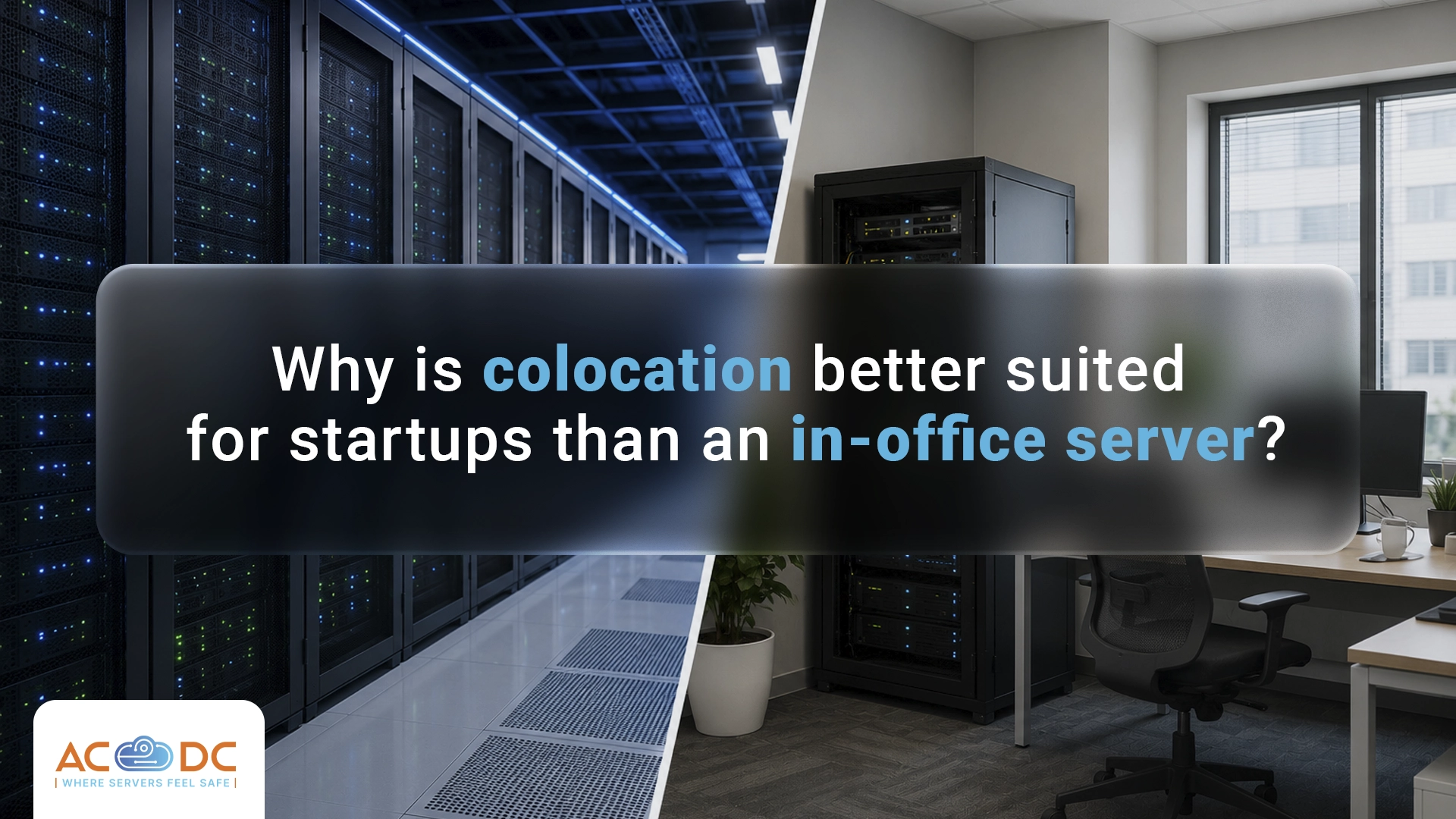






When a startup begins building its IT infrastructure, the decision of where to locate the business server is often underestimated. Many companies make this decision hastily, buying a machine, placing it in the office, connecting it to the Internet, and believing they've secured everything necessary, without any further complications.
Even if this sounds like a reasonable solution to you, in practice it rarely works out that way. Startups have specific needs that typically diverge from the logic of an office server on nearly every important criterion for security and stability in any new or growing company.
In this article, we share why server colocation is especially suitable for startups and is not intended solely for large organizations.
Service reliability and business uptime
For a startup whose business depends on the availability of its product, downtime means direct loss of revenue, users, and trust. And these are resources startups cannot afford to lose.
The office server is vulnerable in ways you may not recognize immediately. Power in the office can go out at any moment, and without UPS and a generator, the server shuts down. If the air conditioning fails on a hot day, equipment overheats and turns off. If your Internet provider has a problem, your work stops indefinitely. None of these scenarios are rare, and none can be foreseen or controlled in an office environment.
In the data center, each of these risks is addressed professionally: with backup power from UPS and generators, round-the-clock cooling regardless of outside temperatures, and multiple independent Internet providers. The failure of one component does not mean business stoppage, as everything is redundant. That is why colocation removes the risks derived from the physical environment.
Read more: What is Uptime and how does it compare in offices and data centers
Initial costs and growth potential
It is typical for startups to launch with limited initial capital, where every euro counts, and at the same time their ambition is for large-scale growth. The choice between colocation or an office server—alongside everything else you need to buy to ensure its reliability—rarely favors the office solution.
A reliable office server with UPS, air conditioning for the server room, a fire protection system, and physical access control costs a significant amount. Add depreciation, maintenance costs, and the salary of the person responsible for all this. The result is rarely cheaper than the monthly fee for colocation and is incomparably less reliable.
Additionally, the data center usually is ready to provide extra space for equipment in case of growth at any time, while your office may require more and more improvements as you scale—leading to even more ongoing investments and expenses.
The money saved from not having in-office infrastructure can go into product development, marketing, recruiting new specialists, etc. This is the alternative cost startups need to consider outside of the monthly colocation fee.
Dependence on a landlord
The office spaces used by many startups are rented, not owned. In many cases, the rented premises do not allow effective server operation (because of location, infrastructure, air conditioning, connectivity, restrictions imposed by the landlord, etc.).
Even if adapting the rented space is feasible and you've thought of every step, don't forget to add the risk of needing to relocate to your investment. In such a scenario, already configured equipment, along with all supporting infrastructure, will have to be moved, and parts of your spending on air conditioning, connectivity, and redundancy may be lost.
Knowledge and information concentrated in one person
In most startups, infrastructure is maintained by a single person. When they're unavailable, no one else knows how the server works, what the passwords are, or how to restart a particular service. This is one of the most significant operational and organizational risks for any startup. Documentation helps partially, but does not eliminate the problem and its potential consequences.
In a data center, physical infrastructure is managed by a professional team. When physical intervention is needed (restarting, component replacement, installation of new equipment), your specialist does not need to rush to the site. This reduces the dependence of your business and operations on specific people for specific tasks.
Clients and investors also care about IT infrastructure
Startups working with large clients or in regulated industries face the question of how information and infrastructure are protected very quickly. If the answer is “server in the office,” it's rare for a corporate client or potential investor to be satisfied.
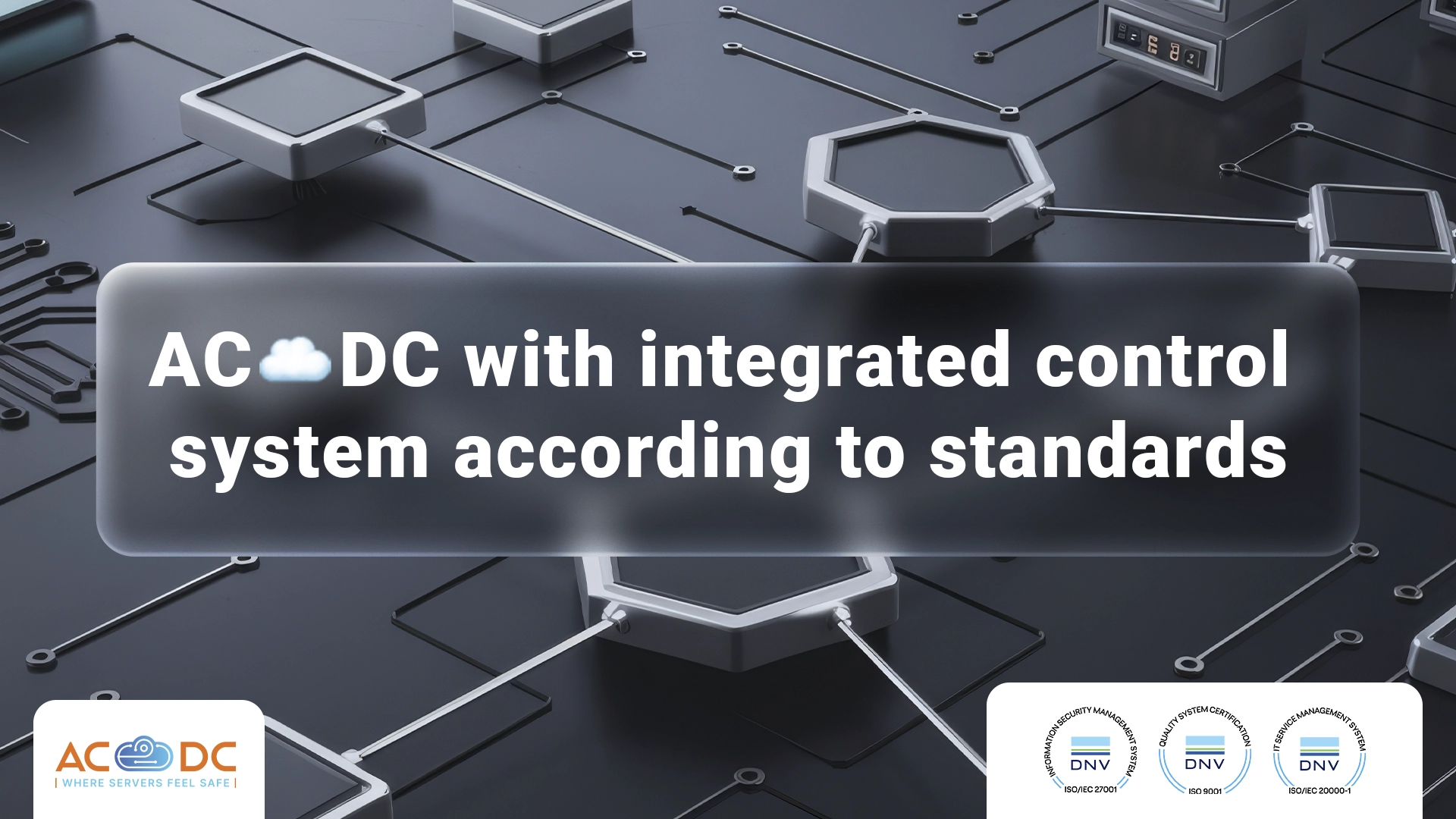
A data center with ISO/IEC 27001 certification, documented processes, and physical security subject to audit is an answer that will be accepted much more positively. It shows that your company is serious about data security and takes concrete measures.
For startups targeting the healthcare sector, finance, or the public sector, such a requirement is strictly regulated.
Physical proximity is not an argument in favor of an office server
One of the most common arguments for an office server is the convenience and the ability to access the equipment immediately in case of a problem. In practice, however, most server issues are software, network, or configuration-related and are managed entirely remotely, regardless of whether the equipment is in the office or data center.
Physical intervention is rarely needed. And when it is, with colocation, the Remote Hands service covers most client needs.
For a startup with a remotely working team, the office server is actually harder to access than the one in the data center, because it requires physical presence at a specific location.
If you run a startup, you’ve probably realized that colocation with flexible conditions and the ability to add or reduce capacity would be a much more reasonable, cost-effective, and sustainable solution for your business, ensuring your servers have the necessary resources at every development stage. Contact our team to learn how we care for startup server equipment in Varna and the region. Don’t forget that you can also visit AC☁DC in person to see firsthand the conditions your equipment will operate under in our high-class data center.
Свържете се с нас
Интересувате се от колокация на сървъри или други услуги? Свържете се с екипа ни още сега.

 23 September, 2026
 16 September, 2026
 9 September, 2026
 27 August, 2026
 18 August, 2026
 11 August, 2026
 4 August, 2026
 28 July, 2026
 21 July, 2026
 15 July, 2026
 7 July, 2026
 21 June, 2026
 16 June, 2026
 9 June, 2026
 2 June, 2026
 27 May, 2026
 19 May, 2026
 12 May, 2026
 6 May, 2026
 21 April, 2026
 15 April, 2026
 8 April, 2026
 1 April, 2026
 24 March, 2026
 18 March, 2026
 11 March, 2026
 4 March, 2026
 26 February, 2026
 19 February, 2026
 5 February, 2026
 3 February, 2026
 27 January, 2026
 20 January, 2026
 13 January, 2026
 8 January, 2026
 4 January, 2026
 22 December, 2025
 17 December, 2025
 10 December, 2025
 4 December, 2025
 26 November, 2025
 17 November, 2025
 11 November, 2025
 4 November, 2025
 27 October, 2025
 20 October, 2025
 8 October, 2025
 5 October, 2025
 30 September, 2025
 19 September, 2025
 15 September, 2025
 4 September, 2025
 29 August, 2025
 23 August, 2025
 16 August, 2025
 12 August, 2025
 6 August, 2025
 28 July, 2025
 22 July, 2025
 15 July, 2025
 11 July, 2025
 3 July, 2025
 19 June, 2025
 3 June, 2025
 27 May, 2025
 21 May, 2025
 14 May, 2025
 7 May, 2025
 29 April, 2025
 23 April, 2025
 14 April, 2025
 8 April, 2025
 27 March, 2025

 0882 355 203