






In many companies, knowledge and skills for maintaining IT infrastructure are concentrated in a small team or a single specialist: system administrator, IT manager, or external consultant. Usually, these people are the only ones who know how systems are connected, what the dependencies are between them, and how critical issues can be resolved.
Organizations that have experienced difficulties, outages, disasters, and IT incidents understand best why this model does not work and how serious the risks are to their business.
IT Issues are a Business Risk
IT issues may seem like a technical matter. However, if critical processes depend on one person, the company actually has no real control over its own infrastructure, and that becomes a business problem.
Lack of Documentation
Very often, the infrastructure functions, but no one can clearly describe the configurations, whether temporary solutions have been added, what the dependencies and changes over the years are, all done without systematic documentation. Changes have occurred informally and remain part of the knowledge of a small team or even a single specialist.
What Happens in Case of an Incident or Absence
Every change, incident, or absence becomes a potential problem. If the key person is unavailable due to illness, vacation, resignation, or simply lacks physical access, response times slow down, the risk of errors increases, and the business loses money, along with clients and reputation. All this can turn even a standard technical issue into operational chaos.
See also: The most common reasons for office server downtime
Reliance on One Person Blocks Business Development
Many companies develop projects related to infrastructure modernization, digital transformation, cybersecurity, and more. However, when one person or team is responsible for the IT infrastructure, every change must go through them, which burdens and slows down processes. Thus, infrastructure can become a limitation for growth, instead of being an asset for your business.
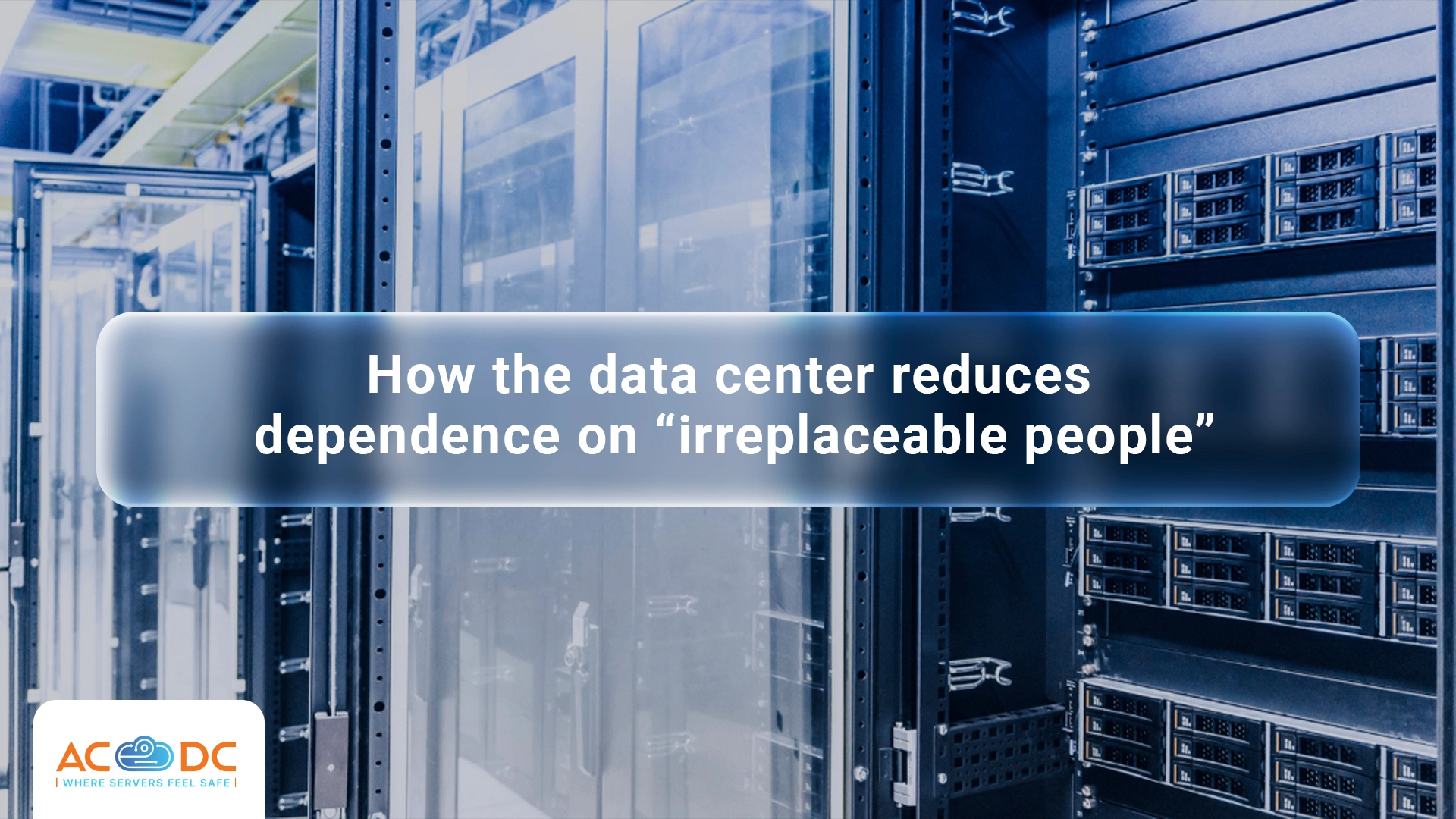
The Right Model: IT Infrastructure in a professional data center
The decision to place your server equipment in a data center will first help you avoid all the problems and dependencies on a single person or specialist within your organization, and then will bring you many other strategic advantages, because:
- IT infrastructure is based on clear processes, procedures, and quality standards;
- Access, maintenance, and management occur under clear rules;
- Monitoring and control are systematic and independent of specific people;
- High-class data centers guarantee continuous server operation, system redundancy, as well as additional conveniences – presence points for various providers and networks, optimal conditions for equipment maintenance and servicing, and many more. For the clients of AbsCloud Data Center (AC☁DC) all these and many other benefits are a standard part of our services.
Can Only One Team Take Care of Your Business IT Infrastructure?
The conclusion from all of the above is that you do not need or require heroes in your company to step in and save the day every time there is an IT incident or technical problem. It is enough to trust a high-class data center, where all potential risks are anticipated, calculated, and prevented, so your employees, clients, and partners won't even know when IT issues occur.
Contact the team at AC☁DC to plan the care of your IT infrastructure in the most appropriate way with an individual plan, tailored to your business needs.
Свържете се с нас
Интересувате се от колокация на сървъри или други услуги? Свържете се с екипа ни още сега.

 9 September, 2026
 27 August, 2026
 18 August, 2026
 11 August, 2026
 4 August, 2026
 28 July, 2026
 21 July, 2026
 15 July, 2026
 7 July, 2026
 30 June, 2026
 21 June, 2026
 16 June, 2026
 9 June, 2026
 2 June, 2026
 27 May, 2026
 19 May, 2026
 12 May, 2026
 6 May, 2026
 21 April, 2026
 15 April, 2026
 8 April, 2026
 1 April, 2026
 24 March, 2026
 11 March, 2026
 4 March, 2026
 26 February, 2026
 19 February, 2026
 5 February, 2026
 3 February, 2026
 27 January, 2026
 20 January, 2026
 13 January, 2026
 8 January, 2026
 4 January, 2026
 22 December, 2025
 17 December, 2025
 10 December, 2025
 4 December, 2025
 26 November, 2025
 17 November, 2025
 11 November, 2025
 4 November, 2025
 27 October, 2025
 20 October, 2025
 8 October, 2025
 5 October, 2025
 30 September, 2025
 19 September, 2025
 15 September, 2025
 4 September, 2025
 29 August, 2025
 23 August, 2025
 16 August, 2025
 12 August, 2025
 6 August, 2025
 28 July, 2025
 22 July, 2025
 15 July, 2025
 11 July, 2025
 3 July, 2025
 19 June, 2025
 3 June, 2025
 27 May, 2025
 21 May, 2025
 14 May, 2025
 7 May, 2025
 29 April, 2025
 23 April, 2025
 14 April, 2025
 8 April, 2025
 27 March, 2025

 0882 355 203