





Choosing a data center is a strategic business decision. Underestimating it involves risks for data security, hidden costs that come out too late, and technological dependencies that are difficult to escape from. The right choice, on the other hand, can become the foundation of the entire IT strategy of a company for years ahead.
Whether you are exploring a colocation option for servers for the first time or considering switching your current provider, the following 10 questions provide a framework to help you compare objectively.
What is the TIER classification of the data center?
TIER classification is an international standard developed by the Uptime Institute, which describes the level of redundancy and reliability of the infrastructure. It can vary from Tier 1 (no redundancy, suitable only for non-critical systems) to Tier 4 (full fault tolerance, designed for highly critical infrastructure for financial, healthcare, and public organizations).
For most businesses, Tier 3 is the minimum sensible standard, ensuring that maintenance and servicing of equipment can be performed without interrupting operations. Tier 2 data centers have only partial redundancy and are unsuitable for systems where even minutes of downtime cause direct business losses.
Learn more here: TIER Classification and What It Means in Practice
What are the SLA guarantees and what happens if they are not met?
SLA (Service Level Agreement) is the contractually binding document that describes exactly what is guaranteed – and what compensation you receive if the guarantee is not met. Many providers advertise “99.9% uptime,” but always pay attention to the details: how is this uptime measured, what does it include, and what do you get if it is not achieved.
Pay attention to the definition of “outage” in the contract, the maximum number of downtime minutes per year (99.9% means ~8.7 hours per year. Can you afford it?), and the specific compensation mechanism. Ask to see all these details before signing a contract with your provider.
Is the data center certified by ISO standards?
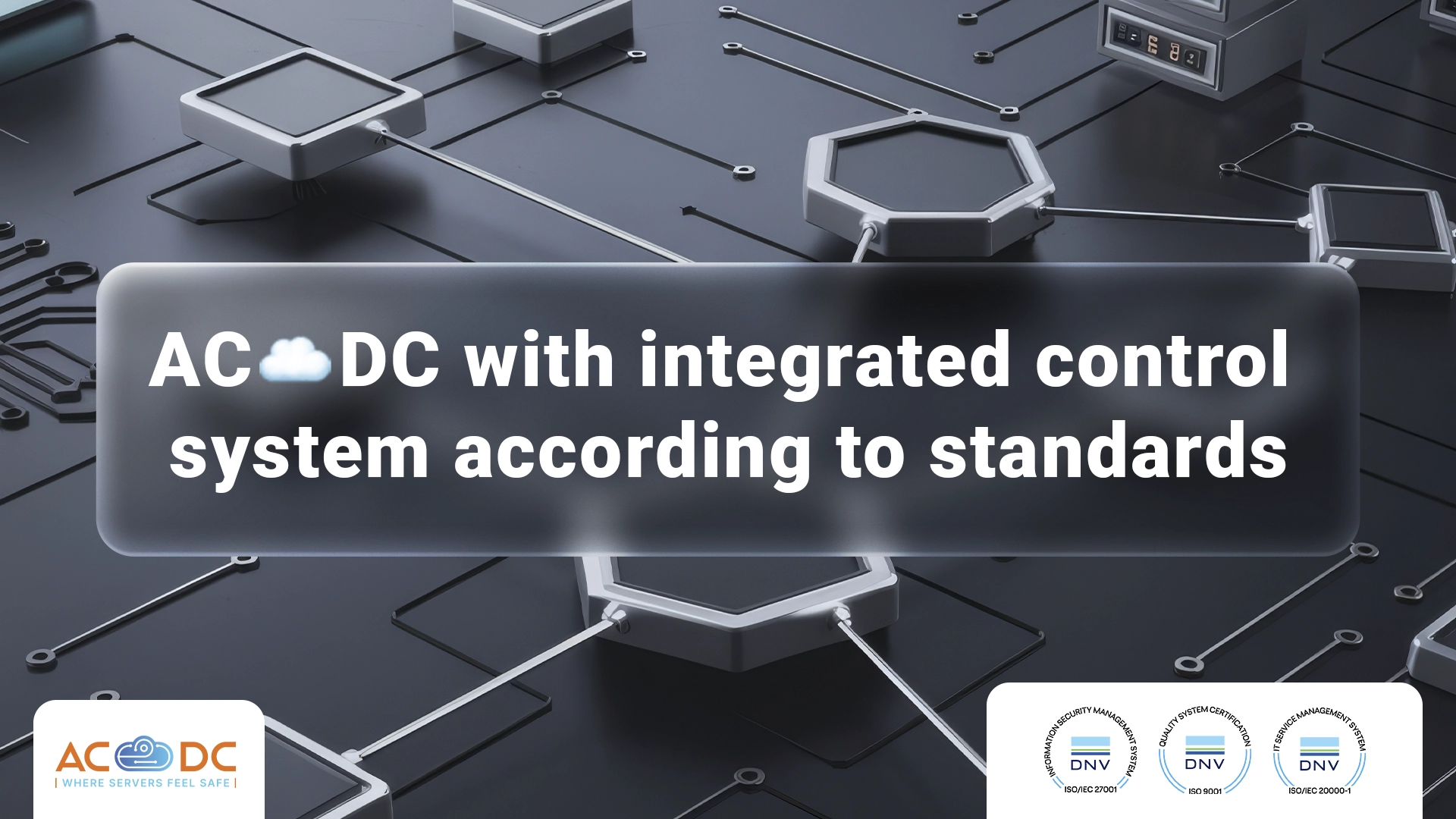
ISO certificates are proof that the data center has undergone an independent audit of its processes, procedures, and systems and continues to do so periodically to maintain its certification.
The three most important standards in the context of data center services are:
- ISO/IEC 27001 – information security management. Guarantees the existence of a developed and audited process for data protection.
- ISO/IEC 20000-1 – IT service management. Means the provider manages its services in a structured, measurable manner.
- ISO 9001 – quality management. General standard for process quality and customer service.
A company with these certificates has proven to an independent auditor that it takes care of its own processes and can manage IT services and the security of its clients.
Learn more about the certificates held by AC☁DC and what they guarantee for our clients
How is power supply backed up?
Electricity is critical for the functioning of a data center. Power outages without adequate backup mean instant downtime, regardless of all other guarantees. That is why it is important to understand whether and how the backup power supply operates in the data center housing your server equipment.
Good infrastructure is designed on several levels:
- independent power supplies from the grid (from different substations or routes);
- UPS systems (uninterruptible power supply that takes over in case of brief grid failure);
- Diesel generators (for longer outages).
Each of these elements protects against different types of events, and the absence of even one represents a vulnerability for the business.
What is the level of physical security?
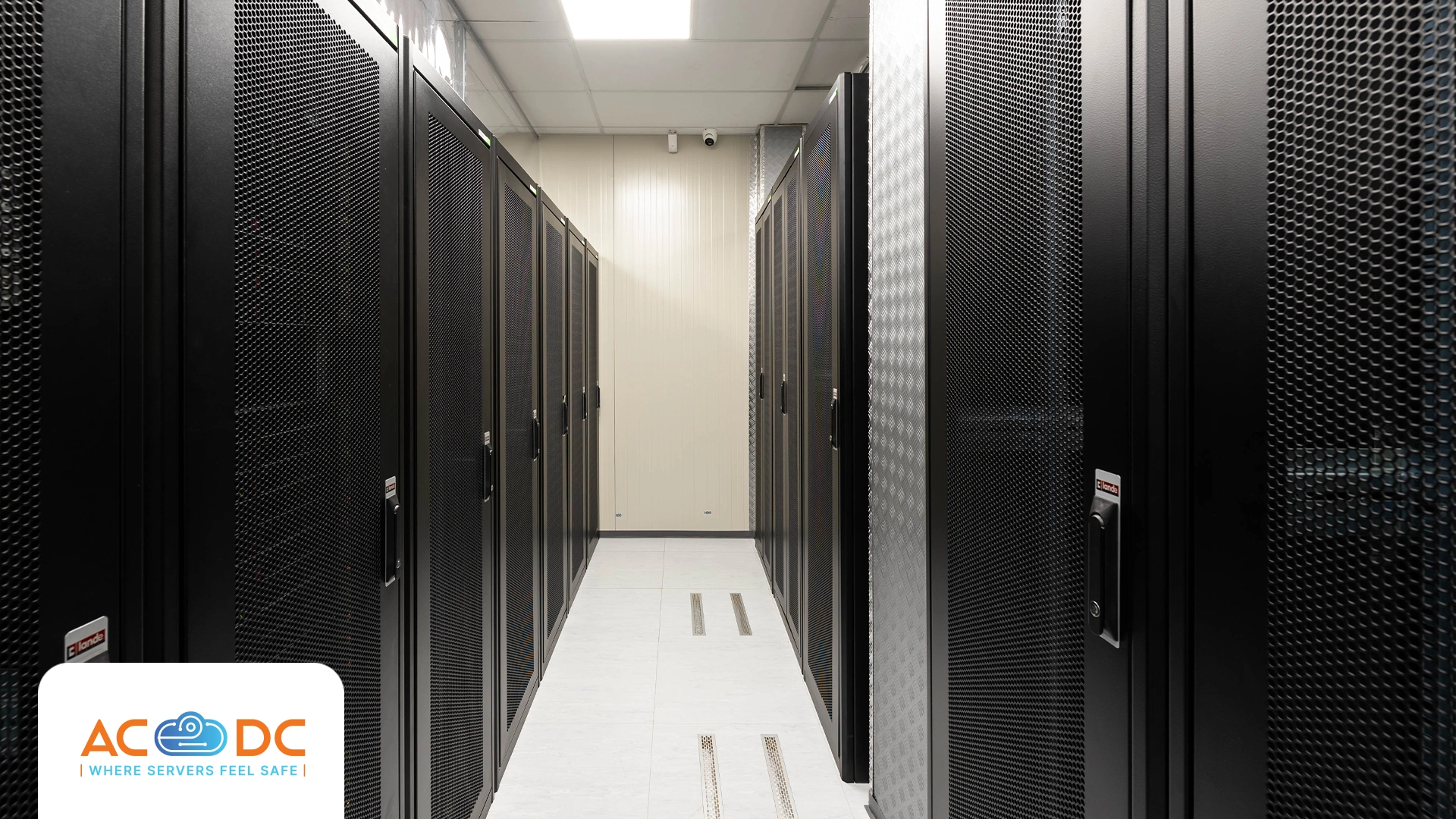
Physical security is one of the most underestimated issues when choosing a data center, yet one of the most critical. Any cyber protection is useless if an unauthorized person can enter the server room and physically access the equipment.
Ask about:
- how access to your data center is controlled and whether it is tracked, documented, and audited;
- if there are additional security measures—are individual racks locked and who has access to them;
- whether there is 24/7 video surveillance;
- fire alarm and extinguishing systems in place
- whether there is round-the-clock security staff
Learn more: Why Physical Security is Critical for Your Data
Is the data center neutral and which connectivity providers are available?
A data center's neutrality means it is not tied to a specific internet provider or telecom operator. You are free to choose, or even combine, multiple providers. When a data center offers such opportunities, competition between providers usually leads to better prices and higher service quality.
Imagine the opposite situation: a data center connected to only one operator, which you are forced to use. If prices go up or service quality declines, your options are limited.
An additional advantage is the presence of an Internet Exchange (IX point), which reduces latency and traffic costs.
Find out what a neutral data center is and why it matters for your business
How close is the data center to your office and users?
Physical proximity has two equally important advantages. The first is latency – the time it takes for data to travel between the server and end users. For most business applications, the difference between a data center 10 km away and one 500 km away is noticeable and measurable.
The second factor is operational accessibility – how easily your IT team can reach the equipment when needed. Data centers that offer Remote Hands & Eyes service may partially compensate for remoteness, but physical presence remains irreplaceable for more complex interventions.
Read more on why physical proximity of your server is a key business advantage
What are the hidden costs not visible in your contract?
The costs for maintaining your IT infrastructure rarely end with the monthly server colocation fee. The real sum depends on billing model for electricity (fixed fee based on estimated power or metered consumption), access fees, the cost of Remote Hands services beyond the included volume, connectivity charges and other contract details with your data center.
A data center in another city adds hidden operational costs as well: transport, travel expenses, lost work time. Before comparing offers, it is useful to calculate your total cost of service, not just the monthly invoice.
See in detail how much a data center in Sofia may cost for businesses from Varna and the region
Is there a Disaster Recovery option?
Disaster Recovery (DR) is the plan that ensures your business can continue after a major incident—hardware failure, fire, natural disaster, or cyberattack. Whether the data center offers DR as a service, or at least is suitable as a secondary DR site for your organization, is a question many companies forget. At least until they urgently need it.
A good DR plan assumes geographical separation between the main and backup infrastructure, clearly defined steps for recovery in a crisis, and regular testing of the plan.
Read why Disaster Recovery planning is critical for business
Is your contract with the provider flexible?
Good partners retain clients through service quality—not contract clauses. From the start, you will be able to determine if your data center aims to achieve this. Long-term contracts with many penalties are the first red flag.
Ask about the minimum contract period, conditions for service changes (adding or removing racks, changing capacity and resources), and what happens in case of early termination.
Flexibility is especially important at the beginning of the partnership: businesses grow, needs change, and a solution suitable today needs to be adaptable so your business has a solid foundation and an IT infrastructure prepared for growth.
AbsCloud Data Center (AC☁DC) is a neutral TIER III data center in the city of Varna, certified under ISO/IEC 2700, ISO/IEC 20000-1, ISO 9001 standards. We are ready to answer any of these questions on site, by phone, or by email. Contact us for a consultation or schedule a visit to the data center and see the resources we have to support businesses in Varna and the region.
Свържете се с нас
Интересувате се от колокация на сървъри или други услуги? Свържете се с екипа ни още сега.

 13 October, 2026
 7 October, 2026
 30 September, 2026
 23 September, 2026
 16 September, 2026
 9 September, 2026
 27 August, 2026
 18 August, 2026
 11 August, 2026
 4 August, 2026
 28 July, 2026
 21 July, 2026
 15 July, 2026
 7 July, 2026
 30 June, 2026
 21 June, 2026
 16 June, 2026
 9 June, 2026
 2 June, 2026
 27 May, 2026
 19 May, 2026
 12 May, 2026
 6 May, 2026
 21 April, 2026
 8 April, 2026
 1 April, 2026
 24 March, 2026
 18 March, 2026
 11 March, 2026
 4 March, 2026
 26 February, 2026
 19 February, 2026
 5 February, 2026
 3 February, 2026
 27 January, 2026
 20 January, 2026
 13 January, 2026
 8 January, 2026
 4 January, 2026
 22 December, 2025
 17 December, 2025
 10 December, 2025
 4 December, 2025
 26 November, 2025
 17 November, 2025
 11 November, 2025
 4 November, 2025
 27 October, 2025
 20 October, 2025
 8 October, 2025
 5 October, 2025
 30 September, 2025
 19 September, 2025
 15 September, 2025
 4 September, 2025
 29 August, 2025
 23 August, 2025
 16 August, 2025
 12 August, 2025
 6 August, 2025
 28 July, 2025
 22 July, 2025
 15 July, 2025
 11 July, 2025
 3 July, 2025
 19 June, 2025
 3 June, 2025
 27 May, 2025
 21 May, 2025
 14 May, 2025
 7 May, 2025
 29 April, 2025
 23 April, 2025
 14 April, 2025
 8 April, 2025
 27 March, 2025
 0882 355 203