





When choosing a data center for server colocation, connectivity is one of the most important criteria. Most businesses ask about speed, connection redundancy, and which ISPs the center works with. Less frequently, however, the question is posed whether the data center is connected to an internet exchange point and what its significance is for the business.
What is an Internet Exchange Point (IX)?
The internet includes an enormous number of separate networks (of internet service providers, telecommunications operators, content platforms, cloud providers, and corporate organizations) that constantly need to exchange data with one another. Here’s how they do it:
One way is indirect: network A sends traffic to network B via a third party – a so-called transit provider. Data travels through one or more intermediaries, each of which adds latency, costs, and potential points or reasons for failure.
The second way is direct: network A and network B connect to each other at one physical location and exchange traffic directly, without an intermediary. This place is the internet exchange point (Internet Exchange, or IX for short).
At a physical level, IX is the equipment to which various networks connect and negotiate direct traffic exchange. Participants in the exchange can include internet service providers, mobile operators, CDN networks, cloud platforms, streaming services, and any other organizations with sufficient traffic volume.
What happens to traffic without an IX?
To understand the importance of an IX, see what happens without it:
Before the emergence of VarnaIX (the internet exchange point with presence in AC☁DC) traffic between two networks in Varna and the region very often was not sent directly from one end to the other. It used to go through an exchange point in the capital city, traversed hundreds of kilometers of network infrastructure in both directions, and only then reached the recipient, who could be just a few kilometers away from the sender.
This is not an exception or a bad practice. It is a result of the topology of internet networks in Bulgaria, where the Sofia region has traditionally been the central hub for traffic exchange. The result is measurably higher latency, greater dependence on location, and lower resilience when there are problems with transit routes.
What changes does the presence of an IX bring?
When the data center is a point of presence for an internet exchange point, the networks connected to it can exchange traffic directly, without having to send it via Sofia or another remote hub.
Here are some possible results of this:
- Latency is reduced. Data travels via a shorter route. For applications where response time matters (ERP systems, online commerce, video conferencing, financial transactions), the difference is real and measurable. Even a decrease of 10–20 milliseconds can be felt in loaded systems with many simultaneous requests.
- Stability is improved. Passing data through fewer networks means fewer potential points of failure. Traffic exchanged locally through an IX does not depend on the availability of a transit route to Sofia or on technical issues with third parties.
- Independence from a single operator increases. In a neutral data center, connected to an IX, clients have direct access to multiple networks. If one operator experiences issues or increases prices, switching to another is easier as there is no need to physically change the connectivity.
- Traffic costs can decrease. Transit traffic (traffic passing through an intermediary) is usually more expensive than direct exchange at an IX. For organizations with high traffic volume, the difference can be financially significant.
Connectivity in AC☁DC
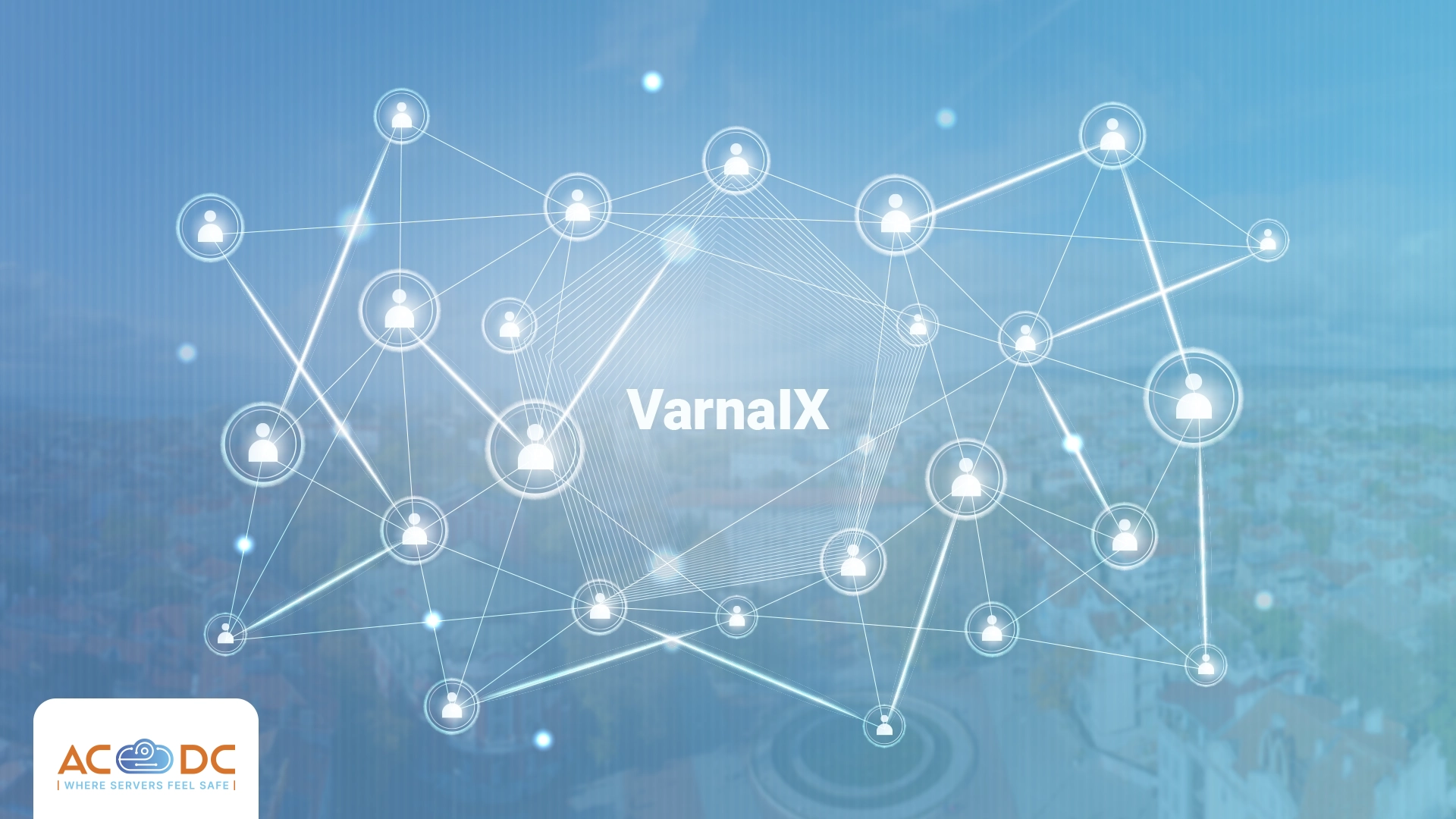
AC☁DC is a point of presence for VarnaIX, which provides local direct traffic exchange in the region. VarnaIX is a neutral point with presence in Varna and Burgas, making it significant for the entire Black Sea region.
Thanks to our partnership with Neterra AC☁DC is also connected to NetIX – an international internet exchange point with a presence in more than 100 cities worldwide. This means that clients of AC☁DC have access not only to local traffic exchange, but also to global networks with good routes to Western Europe, Asia, and North America.
The two levels of connectivity are complementary: VarnaIX provides low latency to local and regional networks, while NetIX does so to global ones. Clients have optical connections of 1, 10, or 40 Gbps depending on their needs.
AC☁DC is also connected to Bulgartel – an operator with independent physical routes covering the whole of Bulgaria.
For which businesses is this topic most important?
The benefits of an IX-connected data center are relevant to a wide range of businesses, but are especially significant for certain types of companies:
- Internet service providers and telecom operators. Participation in an IX is a direct operational necessity. Connectivity to VarnaIX and NetIX directly from AC☁DC saves the cost of building separate routes.
- Companies providing online services – websites, platforms, SaaS apps, online stores. Lower latency means faster loading, better user experience, and fewer lost customers/users.
- Organizations with multiple locations – companies with offices or sites in different cities whose systems constantly communicate with each other. Local traffic exchange reduces costs and improves the reliability of connectivity between sites.
- Businesses with high traffic and latency sensitivity – financial organizations, healthcare systems with real-time data, industrial management systems.
Connectivity as a criterion when choosing a data center
When comparing data centers, questions about connectivity deserve special attention. Ask not only which operators the data center works with, but also whether it is a location for an internet exchange point, which networks participate in the exchange, and what speeds are available.
A neutral data center connected to an IX gives customers true freedom of choice between operators, routes, and levels of connectivity. The alternative is dependence on a single provider, whose infrastructure, prices, and reliability determine the limit of your options.
Do you want to see what connectivity looks like in AC☁DC for the specific needs of your organization? Contact our team or book a tour of the data center.
Свържете се с нас
Интересувате се от колокация на сървъри или други услуги? Свържете се с екипа ни още сега.

 16 September, 2026
 9 September, 2026
 27 August, 2026
 18 August, 2026
 11 August, 2026
 4 August, 2026
 28 July, 2026
 21 July, 2026
 15 July, 2026
 7 July, 2026
 30 June, 2026
 21 June, 2026
 16 June, 2026
 9 June, 2026
 2 June, 2026
 27 May, 2026
 19 May, 2026
 12 May, 2026
 21 April, 2026
 15 April, 2026
 8 April, 2026
 1 April, 2026
 24 March, 2026
 18 March, 2026
 11 March, 2026
 4 March, 2026
 26 February, 2026
 19 February, 2026
 5 February, 2026
 3 February, 2026
 27 January, 2026
 20 January, 2026
 13 January, 2026
 8 January, 2026
 4 January, 2026
 22 December, 2025
 17 December, 2025
 10 December, 2025
 4 December, 2025
 26 November, 2025
 17 November, 2025
 11 November, 2025
 4 November, 2025
 27 October, 2025
 20 October, 2025
 8 October, 2025
 5 October, 2025
 30 September, 2025
 19 September, 2025
 15 September, 2025
 4 September, 2025
 29 August, 2025
 23 August, 2025
 16 August, 2025
 12 August, 2025
 6 August, 2025
 28 July, 2025
 22 July, 2025
 15 July, 2025
 11 July, 2025
 3 July, 2025
 19 June, 2025
 3 June, 2025
 27 May, 2025
 21 May, 2025
 14 May, 2025
 7 May, 2025
 29 April, 2025
 23 April, 2025
 14 April, 2025
 8 April, 2025
 27 March, 2025

 0882 355 203