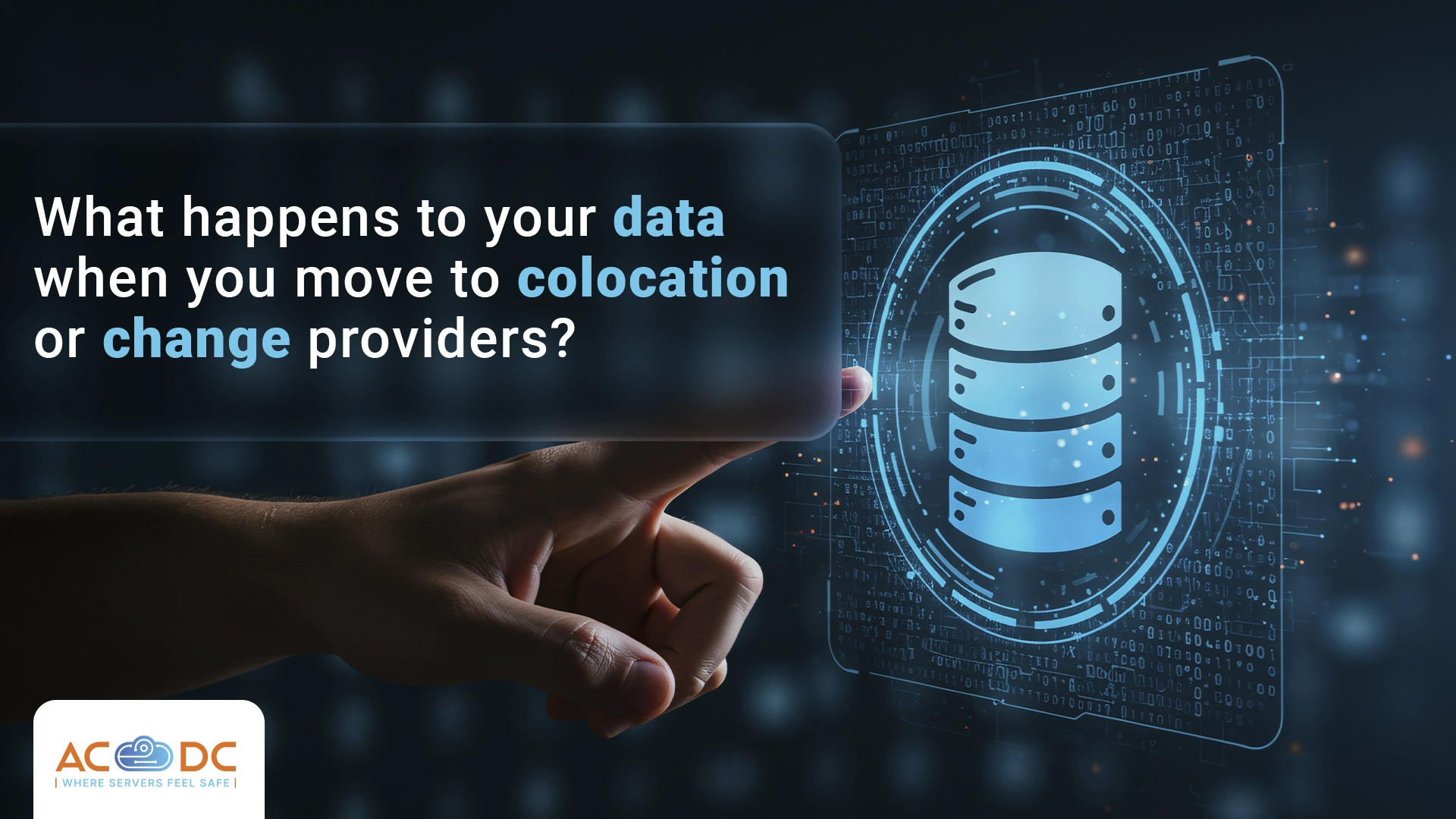






Switching providers or moving to colocation is a topic that few businesses consider deeply at the moment of signing their first contract or deciding where their business server will be located. Understandably, you don’t think about how you’ll move to a different service at that time, but underestimating this question may create problems for you later on.
In this article, we discuss what happens to business data and equipment during migration to another service and how to plan the process so it goes smoothly without unpleasant surprises.
Your data is always your property
In colocation, the equipment is entirely yours. The data is on your servers, your disks, under your control. Unlike cloud services, for example, with colocation there is no “data export” in the technical sense. There’s no API to download an archive, no specific format in which the provider stores your information.
Often, when switching a cloud provider, data must be migrated over the network, and the process can take hours or days, depending on the volume. In colocation, the physical migration is conceptually simpler, but requires precise logistical and operational preparation.
What to check in the contract
Before planning anything operationally, you need to be clear about the contractual obligations. These define the timing and financial aspects of switching providers:
- Notice period: Most colocation contracts require a notice period for termination (could be 30, 60, even 90 days). Terminating without notice within this period may result in additional fees or an obligation to pay for the service regardless of usage. Find out the terms and notice period at your data center provider, even before you need to switch services.
- Minimum contract period: If your contract has a fixed duration, early termination may trigger penalties. Before deciding to switch, it’s good to know exactly what the financial cost is for exiting before the end of the period.
- Access conditions for removal: The contract should describe or at least not restrict your right to remove equipment. Check for specific requirements, such as advance notification to remove equipment, presence of data center staff, access time limitations, etc.
- Final obligations to the data center: Do you need to leave the space and equipment in a certain condition (clean cabinets, removed cables, dismantled mountings)? Also check if there are final processing or administrative fees.
- IP address transfer: If you use IP addresses provided by the data center or an associated operator, plan the transition to your own addresses or addresses at the new provider. Changing public IP addresses affects DNS records, firewall rules, and sometimes licenses tied to IP.
If any of these points raise doubts about how independent you are from your provider, also read our article on Vendor Lock-in in IT infrastructure.
Operational preparation
Switching colocation providers can occur with zero downtime for your business if the process is well planned:
What to plan in advance
A large part of the process, invisible to end users, happens at least several weeks before the actual move.
Sign a contract with the new data center and make sure you already have the physical space, power, and connectivity your equipment needs. Be certain the new location is fully ready before anything is dismantled at the old one.
Document the current configuration exhaustively: network topology, IP addresses, VLAN configurations, firewall rules, DNS records, cabling. If this documentation does not exist, create it now. It will be necessary for your business regardless of migration.
Notify your current provider with the needed notice, if such is included in their policy. Do this in writing and keep confirmation of it.
Plan the connectivity at the new provider: which operators you’ll use, what speeds you’ll need, and whether you’ll rely on the same operator or a new one.
What happens in parallel
The ideal scenario for changing providers is a period when the new infrastructure operates in parallel with the old one. If you have enough equipment and system architecture allows, build a mirrored environment at the new provider and test it under real workloads.
For systems where parallel operation isn’t possible, this stage is shorter, but testing the new environment before migration is mandatory. Connectivity, power, physical access, Remote Hands & Eyes procedures and everything else that is a part of data center services should be tested before the main migration window.
The migration
The actual physical relocation is the shortest stage, but requires precise coordination.
Choose a time with minimal traffic: a weekday night, weekend, or after working hours. Inform all affected parties in advance: internal teams, clients with availability requirements, integration partners, etc.
The process of physically removing equipment includes: dismantling equipment from racks, documenting cabling before dismantling (photos), packing and transport, installation at the new location, connecting power and network, testing before powering on. For complex setups (many servers, specific cabling, non-standard equipment sizes) consider hiring an additional service for assistance from the new provider’s team. The data center staff knows their environment and can significantly speed up the process.
Monitoring and termination of service at the old provider
It’s best practice not to terminate the old service immediately after moving to the new data center.
Keep access active for at least a few days while you make sure everything works correctly at the new location and you have a backup option in case of a critical problem.
Monitor logs for errors, requests to old IPs, and any performance anomalies. Most post-migration issues appear in the first 72 hours.
After successful stabilization, officially terminate the contract with the old provider, remove all remaining physical assets and request final confirmation of termination of contractual relations.
Risks to anticipate:
Hidden dependencies:
- systems configured to communicate with specific IPs instead of DNS names;
- licenses tied to IP or MAC addresses;
- integrations with partners requiring whitelisting specific addresses.
The recommendation from AC☁DC All of this should be identified and addressed before, not during, migration.
Physical surprises:
- the equipment may be heavier or larger to transport than you calculated in advance;
- the cabling may be more complicated to dismantle than you think.
The recommendation from AC☁DC Plan a buffer of at least 30% more time than seems necessary.
Communication with partners and clients: If your clients or partners connect directly to IP addresses or have records that depend on your infrastructure, they should be notified in advance and update their configuration in time.
Note that the most common mistake when switching colocation providers is treating the task and responsibilities as a one-time event. Keep in mind that with server colocation, control over data and equipment is entirely in the client's hands, and the client must take responsibility for the process. Companies who migrate without problems are those whose planning started weeks before the physical relocation, not on the day of moving the servers.
Moving servers to AC☁DC
Our team is experienced in helping clients move their equipment to our data center in Varna from another provider or from an in-house server room, and we can assist you if needed. Some of the options available to you are:
- to install the equipment yourself or assign us the installation;
- to deliver the equipment yourself or send it by courier;
- to use a loading ramp and freight elevator to bring equipment into the data center;
- to prepare the equipment and the necessary fasteners and tools in a dedicated preparation room;
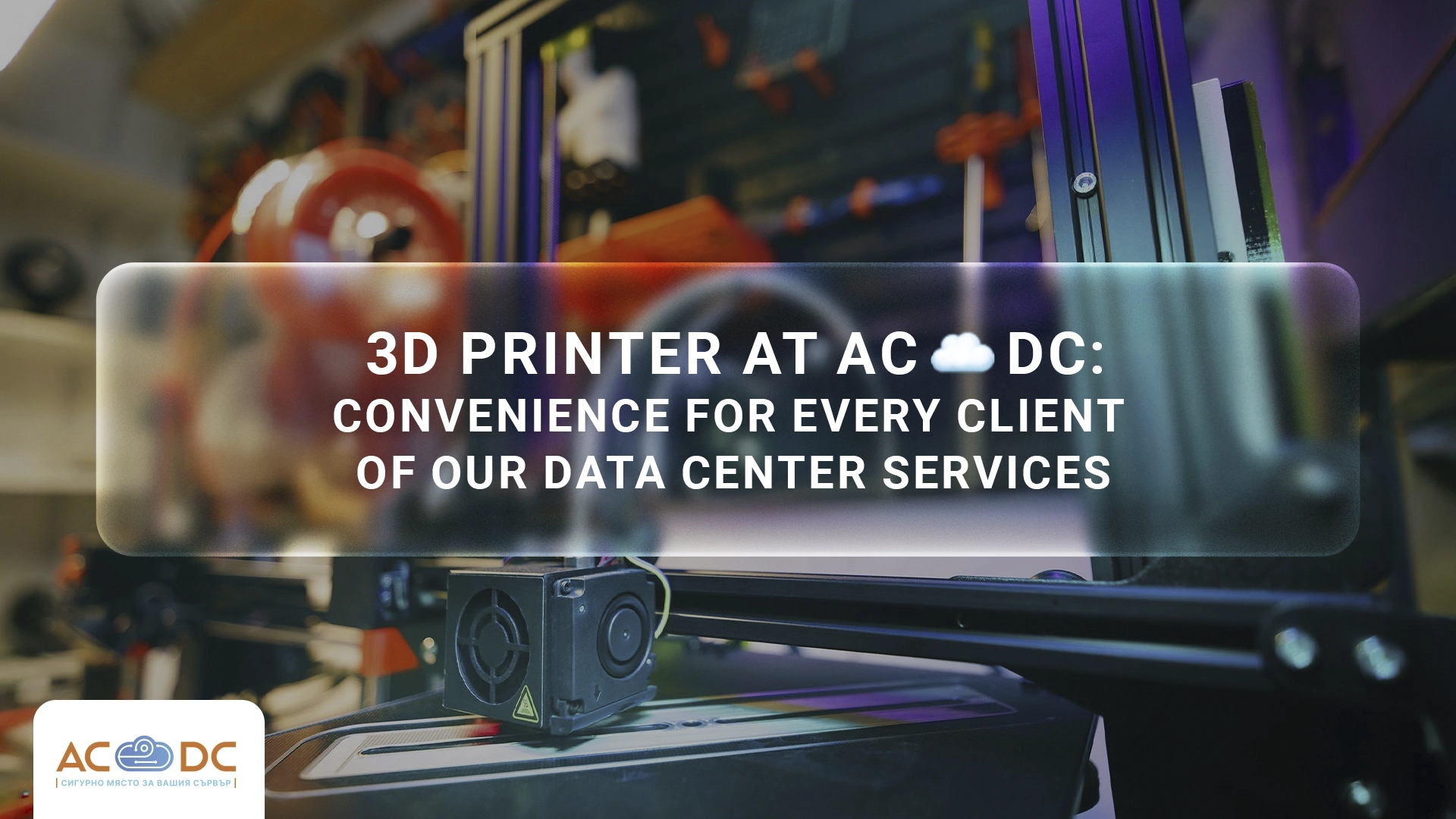
- 3D printer on which you can print a missing accessory or component.
If you are already considering moving your servers to AC☁DC, get in touch with our team today. We assist every client in planning the migration of their equipment from start to finish. You may also book a visit to the data center and see our infrastructure in person.
Свържете се с нас
Интересувате се от колокация на сървъри или други услуги? Свържете се с екипа ни още сега.

 13 October, 2026
 7 October, 2026
 30 September, 2026
 23 September, 2026
 16 September, 2026
 9 September, 2026
 27 August, 2026
 18 August, 2026
 11 August, 2026
 4 August, 2026
 28 July, 2026
 15 July, 2026
 7 July, 2026
 30 June, 2026
 21 June, 2026
 16 June, 2026
 9 June, 2026
 2 June, 2026
 27 May, 2026
 19 May, 2026
 12 May, 2026
 6 May, 2026
 21 April, 2026
 15 April, 2026
 8 April, 2026
 1 April, 2026
 24 March, 2026
 18 March, 2026
 11 March, 2026
 4 March, 2026
 26 February, 2026
 19 February, 2026
 5 February, 2026
 3 February, 2026
 27 January, 2026
 20 January, 2026
 13 January, 2026
 8 January, 2026
 4 January, 2026
 22 December, 2025
 17 December, 2025
 10 December, 2025
 4 December, 2025
 26 November, 2025
 17 November, 2025
 11 November, 2025
 4 November, 2025
 27 October, 2025
 20 October, 2025
 8 October, 2025
 5 October, 2025
 30 September, 2025
 19 September, 2025
 15 September, 2025
 4 September, 2025
 29 August, 2025
 23 August, 2025
 16 August, 2025
 12 August, 2025
 6 August, 2025
 28 July, 2025
 22 July, 2025
 15 July, 2025
 11 July, 2025
 3 July, 2025
 19 June, 2025
 3 June, 2025
 27 May, 2025
 21 May, 2025
 14 May, 2025
 7 May, 2025
 29 April, 2025
 23 April, 2025
 14 April, 2025
 8 April, 2025
 27 March, 2025

 0882 355 203