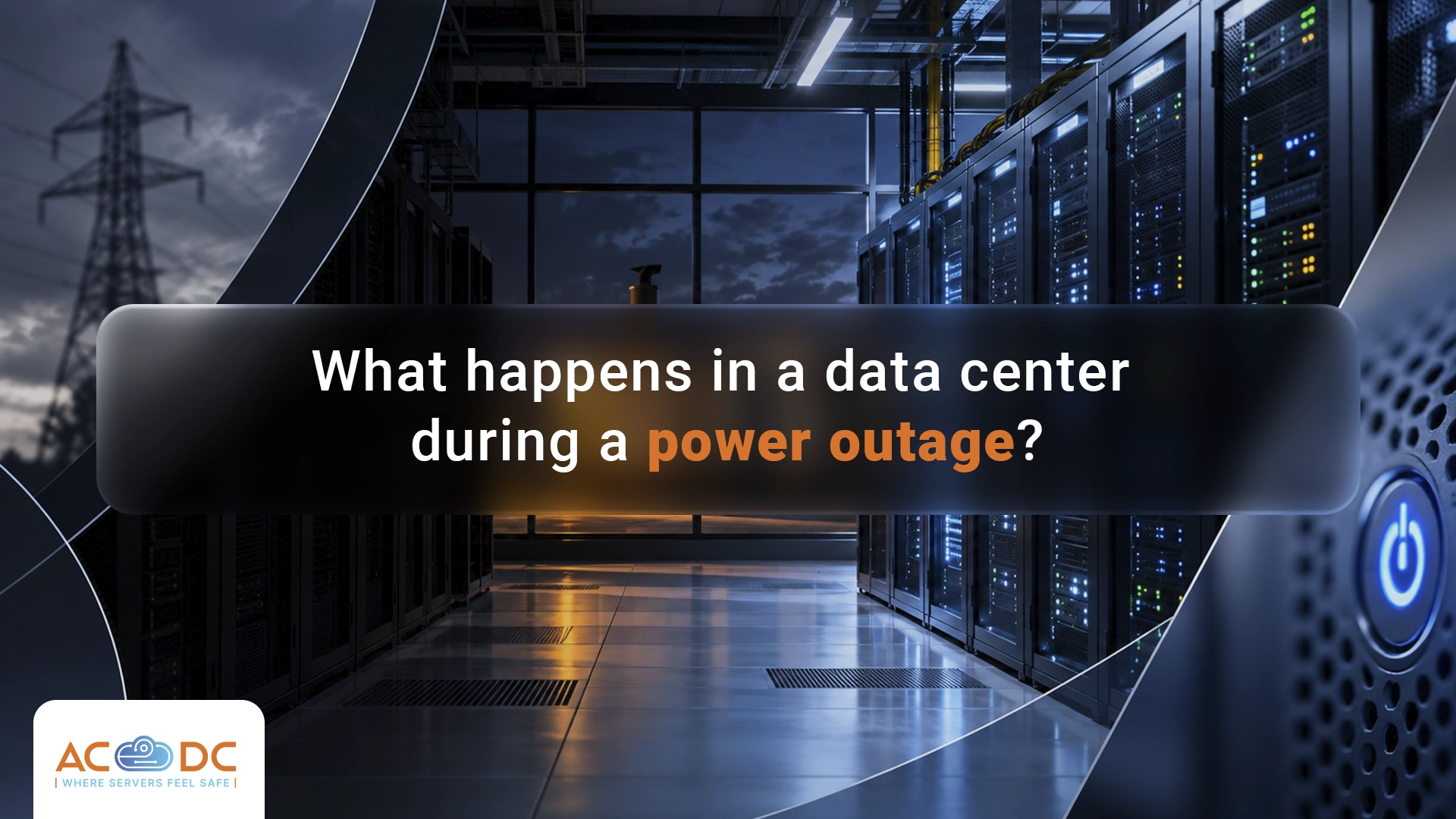






Power outages are one of the most recognizable risks for server infrastructure, as almost everyone knows the consequences of a computer shutting down at the wrong moment.
If the infrastructure is located in the office, the operation of the server is likely directly dependent on electricity: if power goes out, so does the server. In the data center the picture is entirely different - that's why more and more businesses rely on a professional service that can guarantee them business continuity, regardless of external factors.
The Different Levels of Protection in the Data Center
A certified data center does not rely on a single solution against power interruptions. Protection is built on several independent layers, each addressing a different time horizon and type of event.
UPS Systems
An Uninterruptible Power Supply (UPS) is the system that responds first - within milliseconds after the main power supply is interrupted.
When the electric voltage drops or disappears entirely, the UPS system takes over the load, and the equipment does not “feel” any interruption, as if the power had never stopped at all. Servers continue to work, data remains untouched, and active sessions are not interrupted.
UPS systems in the data center are designed to handle the facility's full load and are redundant. If one UPS module fails, the others pick up the load and, depending on the configuration, can sustain it until the generators start.
Additional benefits of UPS systems are also related to power quality. Voltage spikes and drops, even the slightest interruptions or disturbances, damage and shorten the lifespan of equipment and cause errors that are hard to diagnose. Office networks are not designed for such sensitive electronic equipment, but in a data center, you can rely on UPS for this risk too, ensuring your servers operate correctly.
Diesel Generators
While UPS systems handle the instantaneous reaction, diesel generators are prepared for longer-term backup. Their startup takes the seconds or minutes that the UPS batteries provide.
Once the generators reach operational power and stable voltage, an automatic switch transfers the load to them, with the transition being smooth and unnoticeable to users and equipment.
In Tier 3 data centers the generators are redundant. If one fails, the others can handle the entire load. Fuel reserves provide autonomy from 24 to 72 hours, which is sufficient for most power interruption scenarios.
Independent Power Supplies
Beneath the previously mentioned systems, there is another primary layer of protection. A Tier 3 data center is connected to two physically independent power feeds from the electrical grid. They originate from different substations or routes so that a local problem with one does not affect the other.
During normal operation, both feeds are active; if one encounters a problem, the equipment continues to run on the other without triggering the UPS or generators (which remain on standby).
All these protection layers in IT architecture are the reason why high-class data centers guarantee extremely high uptime with business continuity guarantees - as little as under two hours of planned or unplanned downtime per year.
What Happens in the Data Center During a Power Outage:
Within just seconds and minutes, the following steps occur in the data center during a power outage:
- Main power supply is interrupted. UPS systems instantly switch to batteries; equipment keeps running without interruption.
- UPS batteries sustain the system. At the same time, the monitoring system registers the event and notifies the duty team. Diesel generators receive an automatic startup command.
- Generators reach operational speed. The ATS device verifies voltage stability.
- The load is transferred from the UPS batteries to the generators. UPS systems switch to charging mode and remain ready as a backup mechanism.
- The duty team verifies the status of all systems, communicates with data center management, and - if necessary - with clients. The monitoring system continues tracking parameters in real time.
For customers with equipment in the data center, this entire sequence is completely transparent, and servers continue running without interruption. An additional advantage of the data center is that during power incidents, monitoring remains real-time: if there is any deviation, the team is instantly alerted and you can rely on a proactive response.
With an office server, power supply monitoring is virtually nonexistent. An outage is only discovered when someone notices the system is not working.
And What Happens in the Office During a Power Outage:
With a server in the office without a UPS, the equipment stops functioning when the power goes out. The consequences include lost unsaved data, risk of file system corruption on unexpected shutdown, downtime, and the need for manual system restart and checks. Even if you have UPS systems, you can’t rely on prolonged autonomy, nor can you have redundant power as you can in a data center.
During extended power interruptions (grid failures, thunderstorms, or technical incidents) the office infrastructure cannot provide you with normal operation, but the data center creates all the necessary conditions for it.
How to Approach Your IT Infrastructure
For organizations where server downtime can incur a direct financial, operational, or reputational cost, investing in reliable infrastructure is not optional.
Power interruptions are predictable and recurring events that occur with varying frequency and duration. The question is: what will happen to your business when the power goes out?
If your server is in the office, the consequences often mean downtime. However, if you rely on colocation in a certified data center, you are very likely never to notice if there was an electricity transmission problem affecting your equipment.
The AC☁DC Data Center has two independent power feeds, redundant UPS systems, and diesel generators - protection designed for uninterrupted operation regardless of external factors. The systems are regularly tested and maintained, and monitoring works around the clock.
Contact our team using the form below to learn how we take care of our clients’ server equipment, and what benefits our data center in Varna offers for small and large businesses alike.
Свържете се с нас
Интересувате се от колокация на сървъри или други услуги? Свържете се с екипа ни още сега.

 16 September, 2026
 9 September, 2026
 27 August, 2026
 18 August, 2026
 11 August, 2026
 4 August, 2026
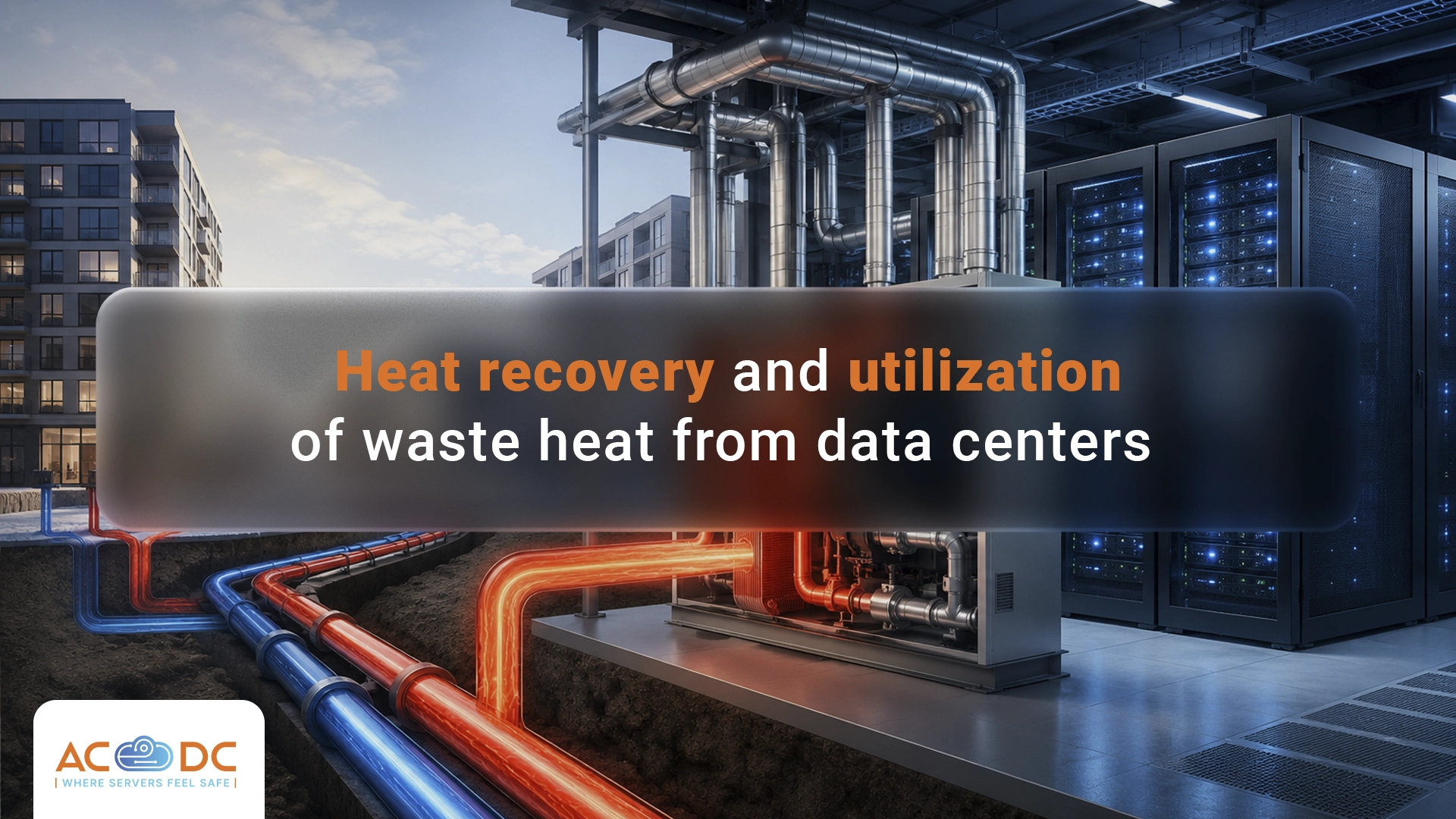 28 July, 2026
 21 July, 2026
 15 July, 2026
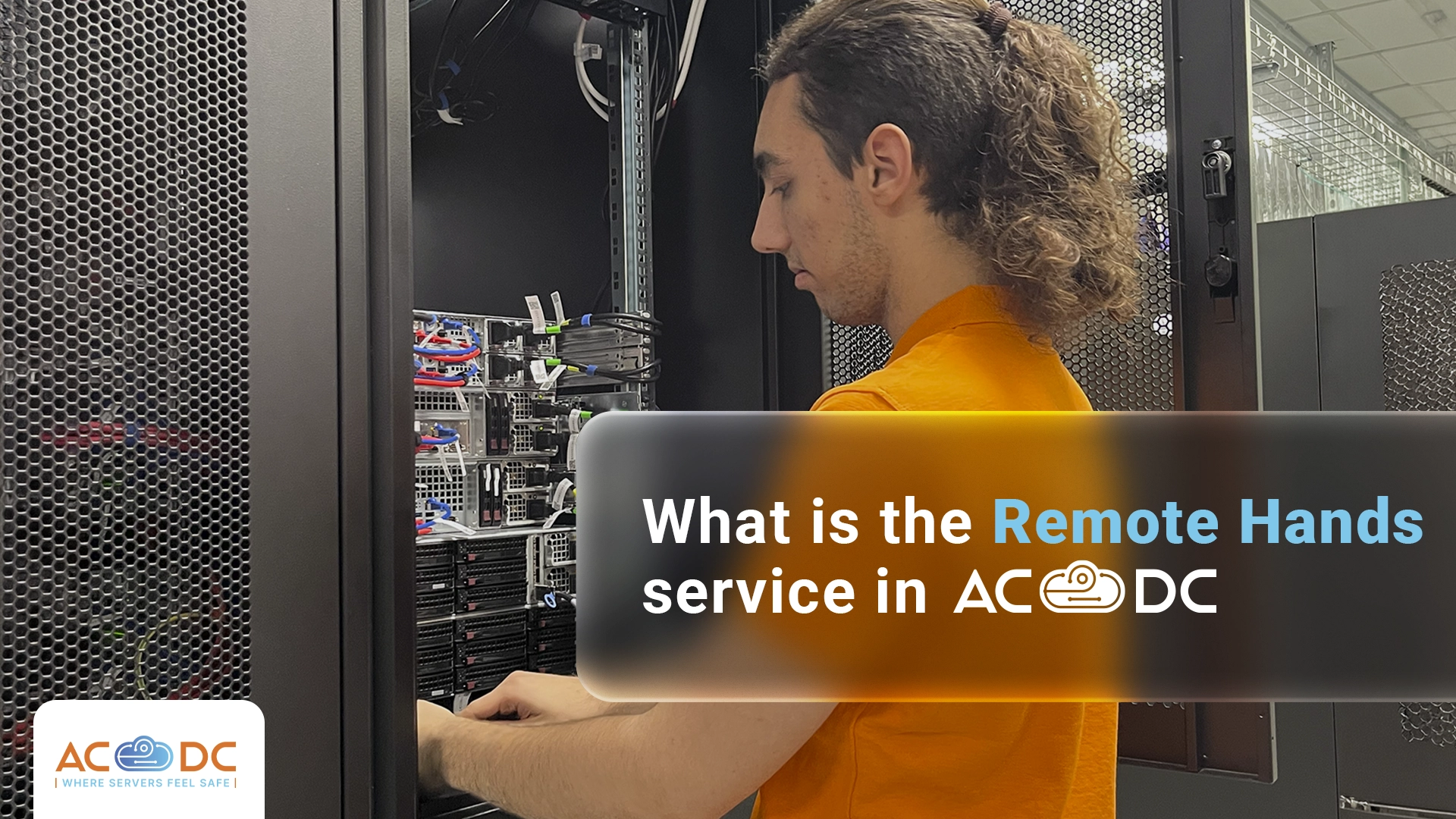 7 July, 2026
 30 June, 2026
 21 June, 2026
 16 June, 2026
 9 June, 2026
 2 June, 2026
 27 May, 2026
 19 May, 2026
 12 May, 2026
 6 May, 2026
 21 April, 2026
 15 April, 2026
 8 April, 2026
 1 April, 2026
 24 March, 2026
 18 March, 2026
 11 March, 2026
 4 March, 2026
 26 February, 2026
 19 February, 2026
 5 February, 2026
 3 February, 2026
 27 January, 2026
 20 January, 2026
 13 January, 2026
 8 January, 2026
 4 January, 2026
 22 December, 2025
 17 December, 2025
 10 December, 2025
 4 December, 2025
 26 November, 2025
 17 November, 2025
 11 November, 2025
 4 November, 2025
 27 October, 2025
 20 October, 2025
 8 October, 2025
 5 October, 2025
 30 September, 2025
 19 September, 2025
 15 September, 2025
 4 September, 2025
 29 August, 2025
 23 August, 2025
 16 August, 2025
 12 August, 2025
 6 August, 2025
 28 July, 2025
 22 July, 2025
 15 July, 2025
 11 July, 2025
 3 July, 2025
 19 June, 2025
 3 June, 2025
 27 May, 2025
 21 May, 2025
 14 May, 2025
 7 May, 2025
 29 April, 2025
 23 April, 2025
 14 April, 2025
 8 April, 2025
 27 March, 2025

 0882 355 203